I’m a neuroscientist building AI models for invasive brain–computer interfaces (BCIs) at the UCSF Department of Neurosurgery.
I received my PhD from Yale School of Medicine, where I helped lead a multi-site clinical trial of brain stimulation, and my BA from Harvard University, where I worked with large-scale human data on sleep and performance.
I want AI to accelerate neuroscience, and neuroscience to advance AI.
Research focus.
-
AI ↔ BCI
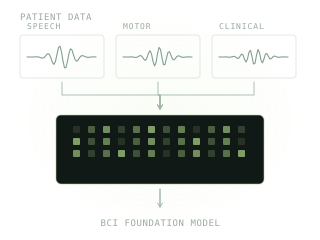
How can we use AI to better study patients with invasive BCI?
APPROACHDeveloping an agent harness and a foundational model for BCI.
CURRENT WORK
UCSF Neurosurgery. Research in progress.
-
Neurostimulation / DBS
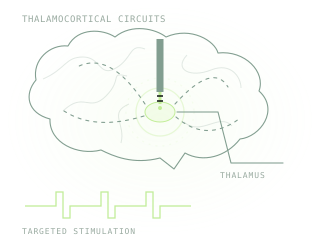
Can targeted stimulation of the thalamus change whether a sensory stimulus reaches conscious awareness?
METHODSIntralaminar thalamic stimulation and perceptual detection tasks, complemented by human thalamic recordings and scalp EEG to study the timing of conscious perception.
REPRESENTATIVE WORK
Modulating perceptual awareness by stimulation of the intralaminar thalamus.
- Human visual consciousness involves large scale cortical and subcortical networks independent of task report and eye movement activity.
-
Sleep restriction
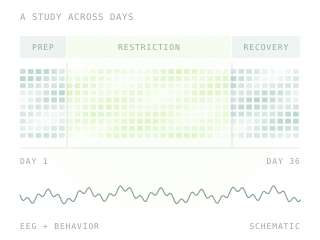
How does sustained sleep restriction change sleep physiology and vigilant attention, and how much recovery is needed?
METHODSAnalysis of large, multiday physiological datasets from a 36 day laboratory protocol, combining continuous polysomnography, sleep staging, EEG spectral measures, repeated psychomotor vigilance testing, and longitudinal mixed effects models.
-
Connectomics & genes
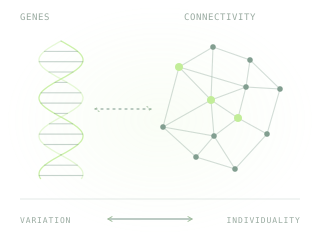
How do cortical gene expression and genetic sequence variation relate to the brain connectivity patterns that distinguish individuals?
METHODSIntegrating Allen Human Brain Atlas gene expression profiles and gene sequence variation measures with repeated resting state functional MRI, graph theory, and spatial analyses of individual connectivity differences.